
Categories
New Blog
Youngpool Technology Auto Splicing Machine | Enhancing Material Error Prevention at the Splicing Stage with LCR Measurement
Feb 06, 2026
As SMT production continues to evolve toward high-mix, low-volume manufacturing, finer material differentiation and frequent lot changeovers have become the norm. This trend makes material verification increasingly critical, particularly at the splicing stage. Components from different batches often exhibit highly similar appearances and dimensions, making misloaded materials more difficult to detect. If errors are not identified during splicing, incorrect components may enter the placement process via the feeder and are often only exposed during downstream testing or rework. This not only increases quality-related costs but also negatively impacts line takt time and delivery stability.
Under traditional manual splicing practices, material error prevention relies largely on operator experience, typically through label verification or visual inspection. In scenarios involving frequent replenishment, night-shift operation, or high personnel turnover, human error is difficult to eliminate entirely. This is especially true for basic components such as resistors, capacitors, and inductors, where specification differences are often impossible to distinguish by appearance alone, making the splicing stage one of the most easily overlooked weak points in the material error-prevention chain.
In response to these industry challenges, Youngpool Technology has integrated LCR measurement-based error prevention as an optional but key functional module in the design of the L-900 Auto Splicing Machine. The measurement system features an independent X-, Y-, and Z-axis structure, operating separately from the vision and taping mechanisms. This design allows component parameter measurement to be completed without interfering with the main splicing process. Utilizing a variable-probe measurement structure, the system supports components down to 01005 size and performs inline resistance, capacitance, and inductance measurements to prevent incorrect materials from continuing down the production line. By moving electrical performance verification forward to the splicing stage, this approach effectively reduces the risk of error propagation at the source and alleviates unnecessary quality pressure on subsequent placement and testing processes.
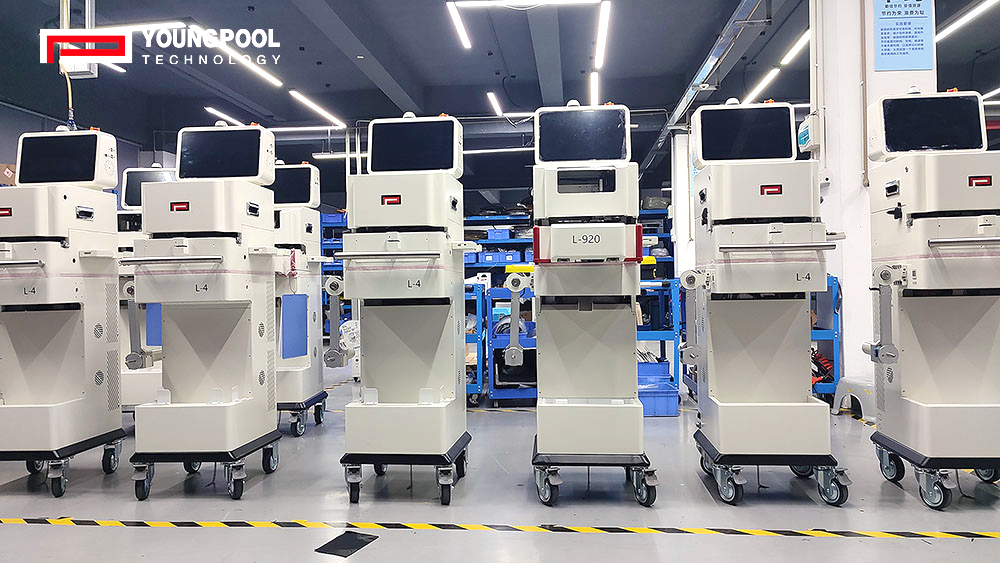
From a system-level perspective, Youngpool Technology incorporates the LCR measurement-based error-prevention function into the overall automation logic of the splicing machine, ensuring alignment with splicing takt time and operator workflow. For SMT production lines that prioritize stability and traceability, this design philosophy—strengthening material error prevention without adding extra labor burden—offers a more controllable and reliable solution for quality management in complex manufacturing environments.
Email: shicx@youngpool.com
Phone: 18124172940


 IPv6 network supported