Categories
New Blog
How Youngpool Technology’s Automatic Splicing Machine Achieves High-Precision Online LCR Testing
Dec 10, 2025In modern SMT production lines that pursue a high first-pass yield, the splicing process is critical to ensuring continuous production. Traditional approaches face challenges in both efficiency and error-proofing, especially with the increasing miniaturization of electronic components. In response, some high-end automatic splicing equipment has begun integrating online LCR testing functions to intercept defects at the source. The effectiveness of this function depends heavily on the technical depth of its implementation.
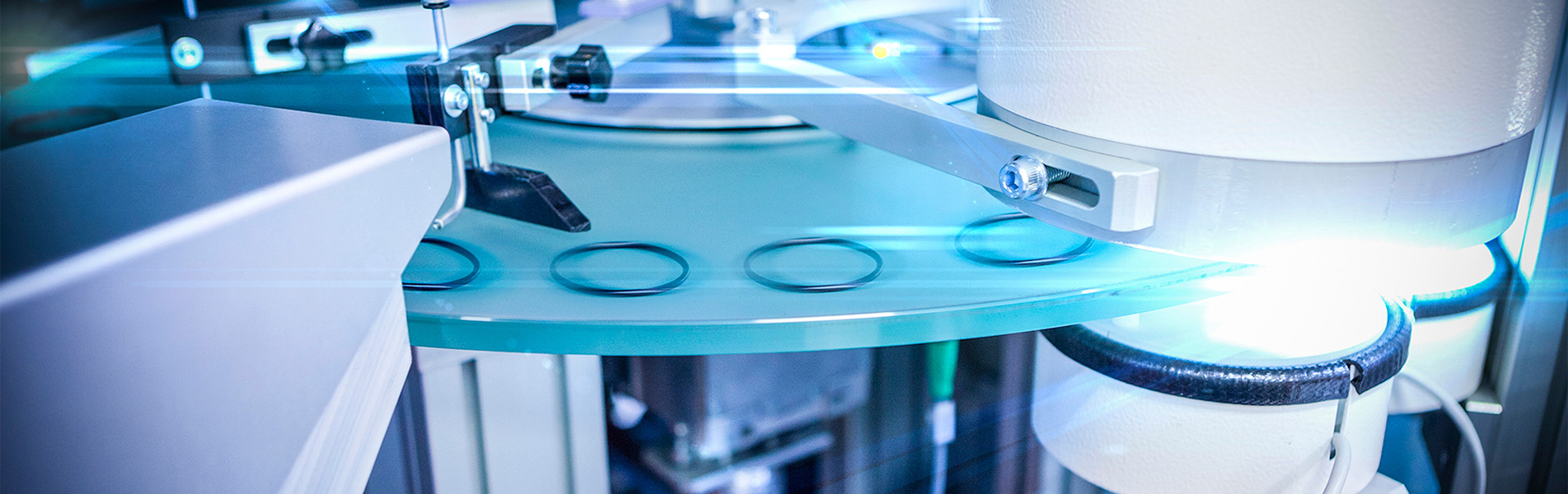
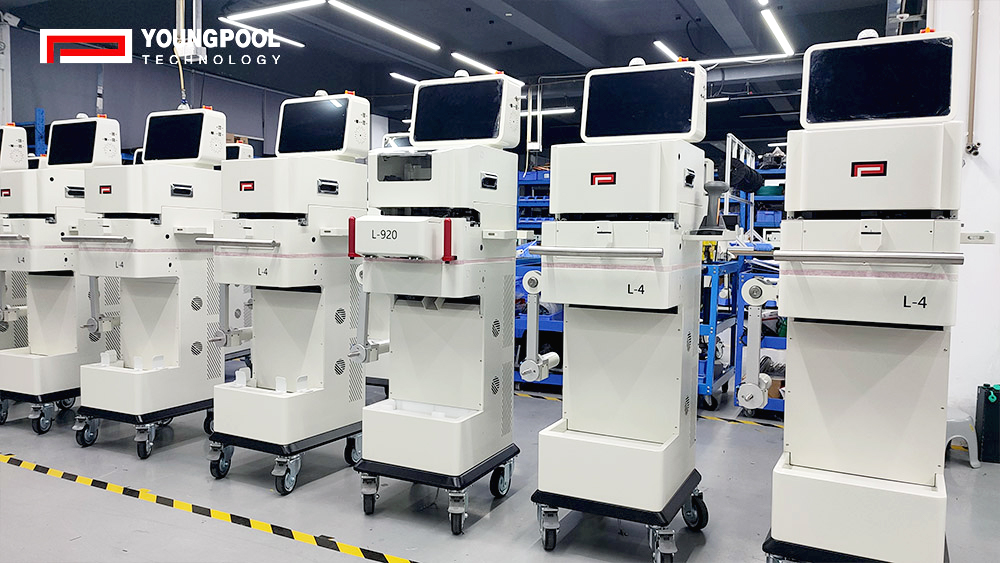
When designing its L-900 and other series of automatic splicing machines, Youngpool Technology focused on two core elements for achieving efficient pre-process inspection: an independent and high-precision motion positioning system, and a highly flexible probing mechanism.
To ensure stability and accuracy in electrical measurements, an independent measurement motion system is essential. Youngpool Technology equips its measurement module with a dedicated X/Y/Z three-axis precision motion platform. The primary purpose of this architecture is to physically isolate the measurement process from splicing, cutting, and other machine operations that may generate vibration. By adopting high-precision linear modules and closed-loop control, the system achieves a repositioning accuracy of ±0.01 mm, providing a stable foundation for probes to reliably contact component terminations and achieve measurement accuracy of ±0.05%, while minimizing mechanical coupling interference.
To address the broad testing requirements ranging from 01005 components to larger package sizes, conventional fixed probe-spacing solutions prove limited. Youngpool Technology’s approach utilizes a variable-probe measurement mechanism. Based on recognition by the vision system or preset programs, this mechanism automatically adjusts the precise distance between the two probes to match the pad spacing of different component sizes. This technology enables a single testing mechanism to adaptively cover multiple package types, enhancing production line compatibility and process flexibility.
The combination of these two technologies enables the splicing equipment to deliver functionality beyond simple physical connection. By simultaneously measuring key electrical parameters during the splicing process, the system can effectively identify incorrect components or materials with parameter drift before loading. This pre-process inspection shifts the quality control point from post-process remediation to proactive prevention, extending yield management to a stage prior to the placement process.
Overall, by integrating independent precision motion control with programmable probing solutions, Youngpool Technology aims to elevate the automatic splicing machine into a front-end process quality monitoring node within the production line. This integrated design provides customers with more reliable production continuity and an initial level of quality assurance in complex, high-demand manufacturing environments.


 IPv6 network supported