Categories
New Blog
As 01005 Components Become Mainstream, What Lies Ahead for Manual Splicing?
Oct 09, 2026As electronic products continue to evolve toward thinner, lighter, and more compact form factors, high-density assembly has become the dominant configuration on SMT production lines. Under this trend, the adoption of 01005 package components is penetrating from flagship models into a broader range of product lines. The body size of an 01005 component is merely 0.4 mm × 0.2 mm, and carrier tape pitch has been compressed from the conventional 2 mm to 1 mm or even smaller.
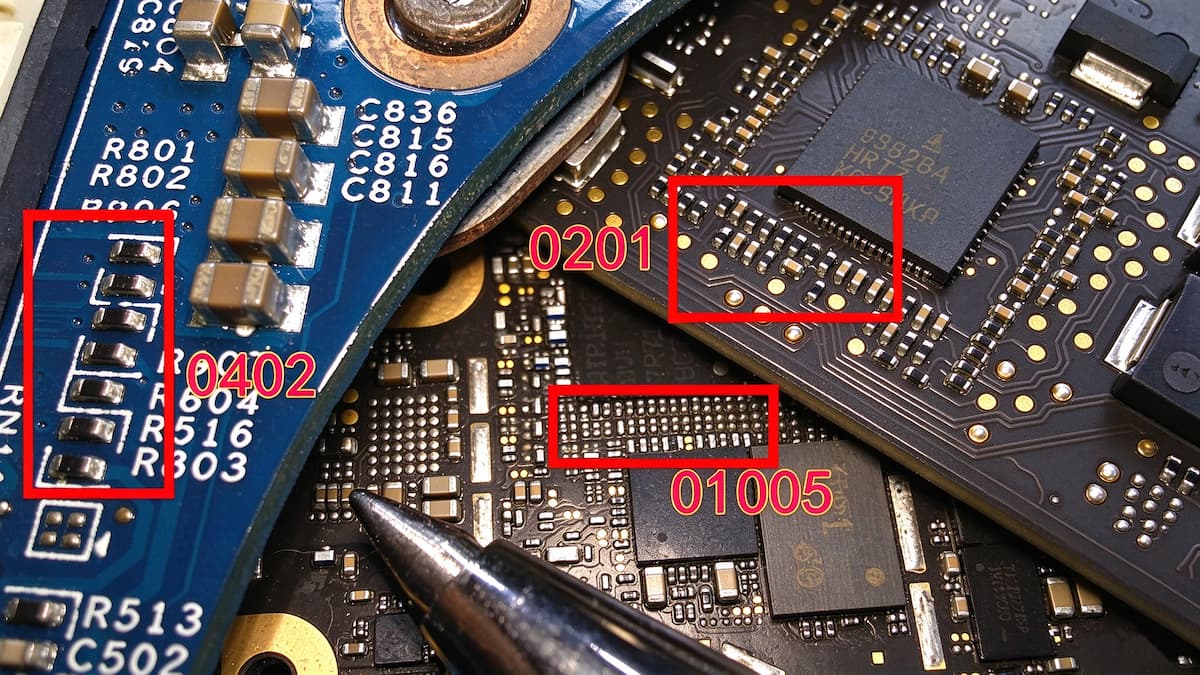
In the splicing scenario for 01005 components, when component size shrinks to 0.4 mm × 0.2 mm and tape pitch narrows to 1 mm, operators are required to perform tape cutting, hole alignment, and splicing. The precision margin for naked-eye identification and manual alignment is drastically reduced. In actual operation, even highly experienced operators find it difficult to ensure that every splice meets the feeder inlet requirements of the pick-and-place machine.
The direct consequence is clear: poor passage through the feeder inlet and frequent pick-and-place machine alarms and downtime. These alarms are typically not equipment faults, yet they require an engineer to be dispatched to the line before production can resume. The problem itself is minor, but its impact on line continuity is very real.
Let us roughly calculate the impact of quality issues in the splicing process on the continuous operation of pick-and-place machines. The following is a set of estimates based on actual production scenarios:
Assume a production line operates at full capacity around the clock across two shifts, consuming approximately 250 reels per day, which corresponds to roughly 250 splicing operations. If approximately one-third of these splices trigger pick-and-place machine alarms due to poor passage through the feeder inlet, that amounts to roughly 83 alarms per day. At an average handling time of 1 minute per alarm, the cumulative daily handling time would be approximately 83 minutes.
Those 83 minutes represent time that high-speed pick-and-place machines could have been producing. A single alarm handling may take only a minute or two, but when accumulated over the scale of 24-hour continuous production, the impact on throughput is no longer a negligible issue. If the engineer happens to be handling matters at another workstation at the time, the waiting period would be further extended.
It is well known that the operating speed of the pick-and-place machine determines the output capacity of the entire production line. A factory's investment in high-speed pick-and-place machines typically accounts for the major portion of its equipment budget, and the return on that investment depends on whether the pick-and-place machine can operate continuously and reliably.
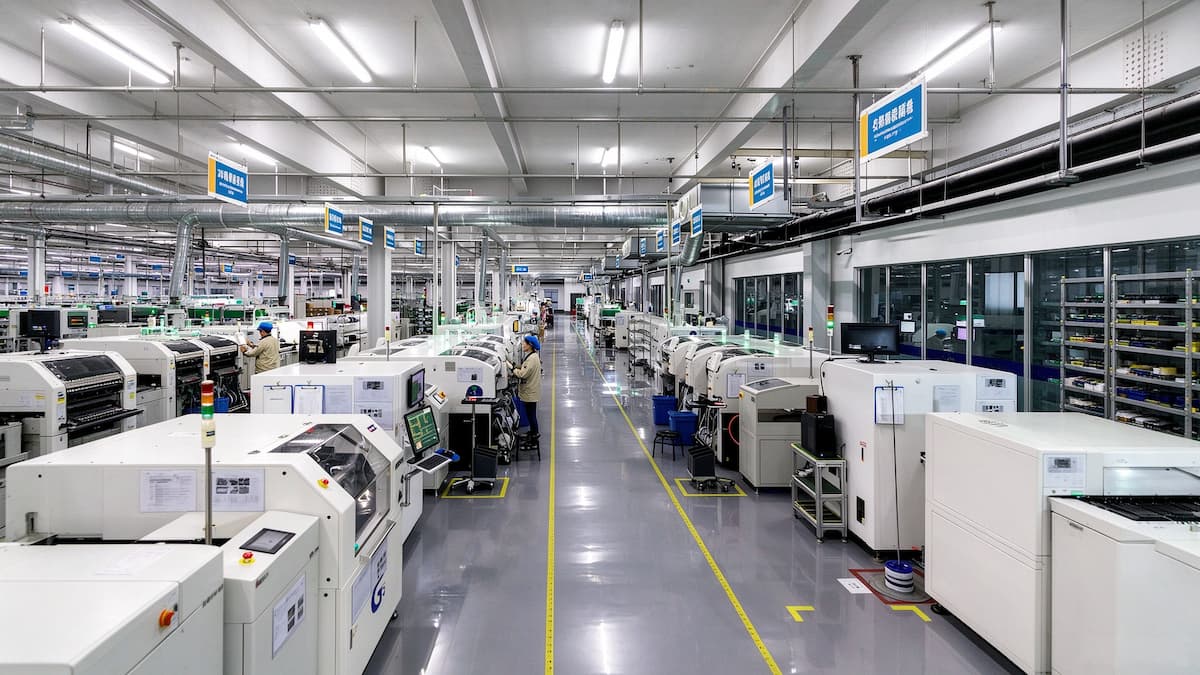
How can we prevent quality issues in the splicing process from disrupting the continuous operation of pick-and-place machines?
Youngpool Technology takes the customer's standpoint, starts from the problems customers actually encounter, and addresses the uncertainty in this process through equipment capability.
Youngpool Technology has been deeply engaged in the SMT industry for over twenty years, having served hundreds of customers with 10 or more SMT lines. The company has long-term observation and understanding of the pass-through rate issue in the splicing process. It is precisely based on this pain point that customers repeatedly encounter in actual production that Youngpool Technology initiated R&D on intelligent splicing machines in 2016. After two years of sustained research, refinement, and testing, the first intelligent splicing machine was launched in 2017.
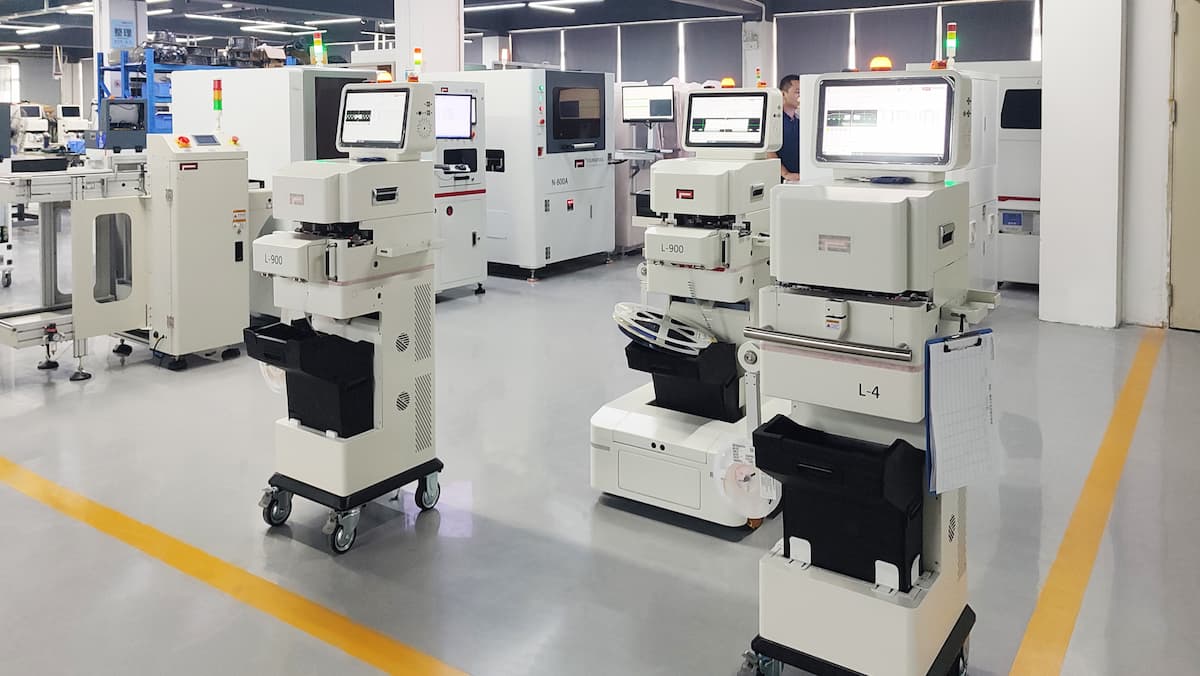
Since then, the product has been deployed at hundreds of SMT enterprises, validated and iterated through extensive real-world production environments. Throughout this process, Youngpool Technology has continuously refined functionality based on customer feedback, progressively introducing features such as 8–24 mm automatic rail changeover, missing component detection, material barcode error-proofing, automatic pitch recognition, large/small component comparison, LCR measurement, silkscreen comparison, and dual take-up arms. Building on this foundation, the company has extended its portfolio with related products including the D-1 intelligent reel splitting machine, L-930 automatic reel merging machine, and L-940 automatic measurement machine, to cover additional practical needs in material management.
Among these, the LCR measurement error-proofing system employs an independent X, Y, Z three-axis structure. Its variable-pin measurement mechanism adapts to different component sizes and supports parameter testing down to 01005 devices. This means that in the splicing scenario for 01005 components, the error-proofing step no longer relies solely on the operator's visual judgment; instead, the equipment performs parameter verification on the component body itself, reducing the risk of wrong material from a process standpoint.
If you are also grappling with splicing pass-through rate or pick-and-place machine alarm issues on your SMT lines, we welcome you to contact us so that we can work together to resolve this problem.


 IPv6 network supported